

Iran Desert Tour : Tehran, Semnan, Mesr, Esfahak, Mahan, Bam, Kalut desert, Kerman, Kashan

Day 1: Arrival in Tehran
Welcome to Tehran, the vibrant capital of Iran! Upon arrival at the airport, you will be greeted by our local representative and escorted to your hotel. Take the rest of the day to relax and settle in, recover from your journey, and get a first glimpse of the city that blends modern energy with deep historical roots.
Traveler’s Tip: If you have some energy left, consider a short evening walk around your hotel area to enjoy a cup of Persian tea and observe the city’s lively atmosphere.


Day 2: Tehran – Semnan
After breakfast, you leave Tehran and begin your journey eastward to Semnan, the capital of Semnan province. Early in your drive, you may notice on your left the Tehran Armenian Cemetery (Borastan Cemetery) with its chapel, Holy Stepanos, a serene reminder of the Armenian Apostolic community in Iran.
As you continue, you pass through small towns and industrial areas before reaching the Sar Darre Mountains, often called the “Martian Hills” for their striking colors. These mountains, on the edge of Dasht-e Kavir, Iran’s largest desert, are dotted with salt mines and attract domestic visitors throughout the year.
Next, you enter the region of Garmsar, rich in history and natural beauty. Highlights here include the 3,500-year-old Stonavand Castle, the scenic desert plains—home to the endangered Iranian cheetah—and historical villages like Padeh, where you can admire ancient water reservoirs and traditional bathhouses. Garmsar is also renowned for its sweet yellow melons, fig trees, and the local specialty Tahchin, a unique layered rice dish; a lunch at a local home can be arranged to experience this culinary treat.
By afternoon, you arrive in Semnan, a historic city known as the city of daffodils, Shirmal pastry, and Kilim rugs. Though less visited by international tourists, Semnan has a rich heritage dating back to the Achaemenid, Parthian, and Sassanid eras, and later flourished during the Qajar period. Key sights include the Semnan Jame Mosque (over 1,000 years old), the Imam Mosque (Soltani Mosque), the Shrine of Sheikh Ala’ed-dowleh Semnani, the Gate of Semnan Fortress, and bustling bazaars like Semnan Bazaar and Pehne Bazaar, along with the historic Taddayon House.
Traveler’s Tip: Stroll the bazaars to admire local handicrafts and perhaps pick up a Kilim rug or taste freshly baked Shirmal pastry.

Day 3: Semnan – Mesr (Heart of Dasht-e Kavir)
Today, you journey deep into the heart of Dasht-e Kavir, also known as the Great Salt Desert, spanning several provinces including Khorasan, Tehran, Semnan, Isfahan, and Yazd. Geologists suggest that this vast desert may have formed from the evaporation of an ancient sea, leaving behind the iconic salt flats. The region also hosts protected areas that shelter rare wildlife, including Persian gazelles and elusive leopards.
Historically, Dasht-e Kavir was part of a strategic Silk Road route, connecting northern and southern Iran. You follow the road from Damghan to Jandagh, a desolate yet enchanting route where the landscape seems to constantly transform, from salt plains to rolling sand dunes.
Your destination is the village of Mesr, a true desert oasis surrounded by towering sand dunes. Here, you can walk for hours atop the golden dunes, soaking in the quiet and serenity of the desert. As the sun sets, the dunes glow with warm, magical colors—a memory that will stay with you forever.
You spend the night in a cozy ecolodge run by local families, where a homemade dinner awaits you, offering a delicious taste of traditional desert cuisine.
Traveler’s Tip: Don’t miss walking to a high dune at sunset—this is one of the most memorable experiences in Iran’s deserts.

Day 4: Exploring the Dunes of Mesr
After breakfast, get ready for an adventurous day in the heart of Dasht-e Kavir. You will traverse the desert on a jeep ride over bumpy sand dunes, offering both excitement and a unique perspective of this vast, silent landscape.
Throughout the journey, there will be plenty of photo stops, giving you the chance to capture the ever-changing colors and textures of the desert. Take your time to walk over the dunes, feel the sand beneath your feet, and fully embrace the tranquility of this remote region.
By late afternoon, you return to your comfortable accommodation on the edge of the desert, where you can relax and watch the sun set over the dunes—a perfect way to end another unforgettable day in Mesr.
Traveler’s Tip: Bring a scarf or shawl for sand protection, and wear shoes that are easy to remove—you’ll want to walk barefoot on the soft dunes!
Day 5: Mesr – Esfahak via Tabas
Start your day early to catch the sunrise over the desert, a magical moment as the golden light spreads across the dunes. You may also enjoy a few more quiet hours exploring Mesr village, soaking in the unique desert atmosphere.
Today you’ll travel from one desert village to another, immersing yourself in desert life and landscapes. Leaving Mesr, the road winds through small desert settlements and opens onto the spectacular terrain of Tabas. This hidden gem is a desert city with a rich history dating back to pre-Islamic times. Despite being largely unknown to tourists, Tabas surprises visitors with its refreshing orange orchards, magnificent date palms, and natural springs. The Golshan Garden in the heart of the city is a true oasis, filled with 300-year-old trees, colorful shrubs, and sparkling water streams—a little paradise in the middle of the desert.
For the adventurous, a quick detour to Kal-e Jeni Canyon is highly recommended. Known as the “Valley of the Jinn,” this dramatic natural wonder has been shaped by centuries of water erosion, and its mysterious atmosphere lives up to its legendary name.
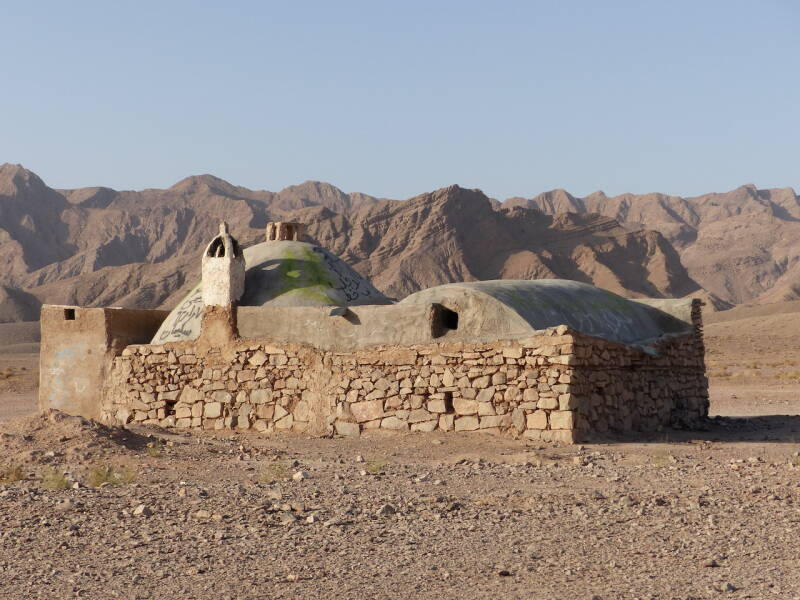
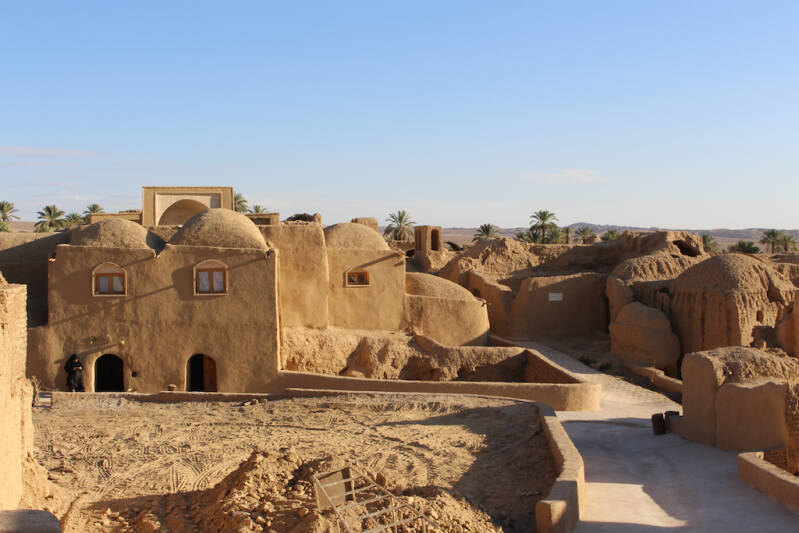
Continuing your journey, you’ll pass Korit village before arriving at Esfahak, an old village near the mountains. Thanks to underground water sources, the village enjoys a milder climate than Tabas, allowing for cultivation of crops like dates and saffron. The original village was destroyed in a 1978 earthquake, but the old section has been renovated into a cultural tourism center, complete with restored houses and a traditional bathhouse. Tonight, you’ll stay in one of these charming eco-lodges, experiencing life in a revived historical village.

Day 6: Esfahak – Mahan via Nayband
After breakfast, your journey continues toward Mahan, with a special stop at the isolated village of Nayband. Often hailed as one of the most beautiful desert villages in Iran, Nayband rises like a fortress over the desert. Built on a steep hill, its houses along the edge form natural fortifications, complete with round watchtowers. At the foot of the village, you’ll discover lush gardens—rice fields, date palms, pomegranates, and orange trees—that contrast vividly with the surrounding arid landscape. Wandering the narrow alleys of Nayband, you may feel like you’ve stepped into the old kasbahs of Morocco, but here there are no crowds, no hotels, no souvenir shops, just authentic desert life.
After exploring Nayband, continue your drive to Mahan, a charming little town known for its beautiful mausoleum. Tonight, experience a refreshing change from the desert heat with a stay at the Shazdeh Garden (Prince’s Garden). This exquisite palace garden is a tranquil oasis of rippling fountains, colorful flowers, shade-giving trees, and singing birds—the perfect place to unwind. Don’t miss the chance to enjoy breakfast in the garden arbor, where stained-glass windows frame a serene view of the lush greenery.

Day 7: Mahan – Bam via Rayen
Today your journey takes you to the historic city of Bam, world-famous for its ancient citadel. On the way, you’ll stop at the Rayen Citadel, a smaller but remarkably well-preserved fortress reminiscent of Bam. Explore its winding alleys, sturdy walls, and traditional mud-brick architecture—a perfect introduction to the grandeur of desert fortifications.
In the afternoon, you’ll arrive in Bam, once home to one of the largest mud-brick structures in the world. Although the city and its citadel were severely damaged in the 2003 earthquake, much has been reconstructed with careful attention to traditional methods, allowing you to appreciate its historical grandeur. Stroll through the citadel and admire the meticulous restoration work that brings this ancient city back to life.
The town of Bam itself is also a delight. Take some time to relax in a local tea house, chat with friendly locals, and experience the calm rhythm of daily life in this historic desert town.

Day 8: Bam – Kalut Desert
This morning you’ll have some free time to explore Bam further—whether revisiting the citadel or wandering through the charming streets of the town. Afterwards, you’ll drive along a scenic mountain route to Shahdad, the last town before entering the legendary Dasht-e Lut desert.
The Dasht-e Lut, recognized as one of the hottest places on Earth, has even registered temperatures above 70°C according to NASA measurements. Here, the landscape is otherworldly. At sunset, you’ll visit the Kaluts, towering rock formations that rise dramatically from the desert floor. Their vast scale and unique shapes create a scene reminiscent of the Grand Canyon, or the Acacus Mountains of the Sahara.
You’ll stop at a viewpoint to watch the Kaluts glow red in the sunset, a truly unforgettable sight. For the adventurous, there is an option to walk deep into the desert and explore the formations up close.
Tonight, you’ll sleep under the stars at a simple desert camp—an incredible opportunity to experience the vast, silent beauty of the Lut Desert in the open air.

Day 9: Kalut Desert – Sunrise and Dey Seyf Village
Start the day early with a sunrise tour of the spectacular Kalut Desert. As the first light of day illuminates the towering rock formations, the desert takes on a magical glow—a truly unforgettable experience for photographers and nature lovers alike.
After sunrise, you’ll have the chance to explore the nearby village of Dey Seyf, a traditional mud-brick village surrounded by lush gardens and date palms, a striking contrast to the arid desert landscape. Here, you can also visit a large, historic caravanserai, a reminder of the region’s ancient role along trade routes.
This morning in the Lut Desert combines dramatic natural scenery with glimpses of traditional desert life, offering an immersive experience in one of Iran’s most remote and beautiful landscapes.

Day 10: Kalut Desert – Kerman
After your final morning in the stunning Kalut Desert, you will drive to Kerman, a charming city in eastern Iran surrounded by desert and mountains. At an altitude of 1,750 meters, Kerman enjoys a pleasantly cool climate, offering a welcome change from the desert heat.
Upon arrival, explore the city’s central square and its beautiful mosques, each reflecting intricate Persian-Islamic architecture. Don’t miss the 17th-century bathhouse, now converted into a museum, where you can learn about traditional Iranian bathing culture.
A stroll through Kerman Bazaar is a highlight—one of the finest in the country—where you can admire handicrafts, carpets, and spices, and soak in the lively local atmosphere.

Day 11: Kerman – Yazd
Today you will leave Kerman and head to the desert city of Yazd, one of Iran’s most beautiful and unique cities. Famous for its well-preserved old town, Yazd offers a charming mix of winding alleys, traditional mud-brick houses, and vibrant bazaars.
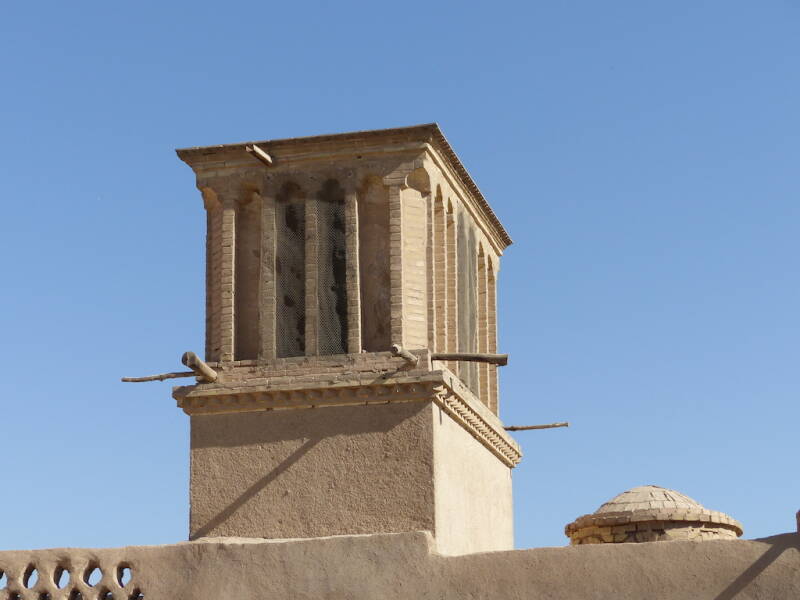
Stroll through the streets and admire the distinctive wind towers (badgirs), an ancient form of natural air conditioning that channels breezes into homes. You’ll also notice the ingenious qanat system, underground channels that bring meltwater from the mountains, supplying water to even the driest parts of the city.
Yazd is filled with tea houses, restaurants, and small boutique hotels, making it a perfect place to relax, explore, and soak up the city’s unique desert charm.
Day 12: Exploring Yazd
Today is a full day to explore the charming streets of Yazd. Wander through the maze-like alleys and discover some of the city’s beautiful mosques, including the historic Friday Mosque and the striking Masjed-e Mir Chakhmaq. In the square, you’ll find one of Iran’s most exquisite takieh, a place where during the Moharram mourning period, traditional passion plays commemorate Imam Hussein, who was martyred in Kerbala.
Yazd is also the center of Zoroastrianism in Iran. You can visit the Atashkadeh (Fire Temple) and see the Towers of Silence surrounding the city — traditional cemeteries where Zoroastrians laid their dead. These sites offer a fascinating glimpse into the spiritual and cultural traditions of the region.
In the evening, experience a unique aspect of Iranian culture at a Zurkhaneh (House of Strength), where athletes perform traditional sports and martial exercises to the rhythm of drums — a spectacle that blends strength, agility, and ritual.
.

Day 13: Yazd – Kashan
After breakfast, your driver will take you to Yazd train station, where you’ll board a comfortable train to Kashan. The journey takes just a few hours, and by the afternoon, you’ll arrive in this charming oasis town. Kashan is known for its lively bazaar, stunning historic houses, and one of Iran’s most celebrated gardens, Fin Garden — a refreshing green oasis amid the arid surroundings. The garden attracts many Iranian visitors, offering a perfect glimpse into the Persian love for tranquil, beautifully maintained spaces.
The rest of the day is at your leisure to explore the splendid heritage of Kashan. Visit the elegant Tabatabei House, with its four inner gardens, colorful stained-glass windows, and intricate murals. Nearby, Khan-e Abbasi showcases exquisite architecture and decorative artistry. Another must-see is the Bujerdi House, owned by a Samovar merchant, featuring a serene courtyard and frescoes by Kamal al-Molk, one of Iran’s most renowned artists.
Don’t miss Hammam-e Sultan Mir Ahmed, one of Iran’s most beautiful traditional bathhouses, adorned with vibrant tiles. Walking to its roof at sunset provides a stunning view over Kashan. Stroll through the Kashan Bazaar, visit its charming caravanserai, and enjoy tea at a traditional tea house. The combination of history, architecture, and local culture makes Kashan a delightful stop on your journey.
Day 14: Departure from Kashan / Tehran
On your final day, enjoy a leisurely morning in Kashan. Take the time to wander the streets, soak in the atmosphere of this historic oasis town, and perhaps pick up a few souvenirs from the local shops before your departure.
Later, you will be transferred to Tehran Airport for your international flight. As your journey through Iran comes to an end, take a moment to reflect on the diverse landscapes, rich history, and warm hospitality you’ve experienced.