

Iran Heritage Tour; Tehran, Kashan, Yazd, Kerman, Mahan, Persepolis, Shiraz, Isfahan

Day 1 – Arrival in Tehran
Upon arrival at Tehran Imam Khomeini International Airport, you will be warmly welcomed by our representative, who will provide an escorted transfer to your hotel in the capital of Iran. Take the rest of the day to relax and settle in, preparing for the exciting journey through Tehran’s history, culture, and attractions that lies ahead.

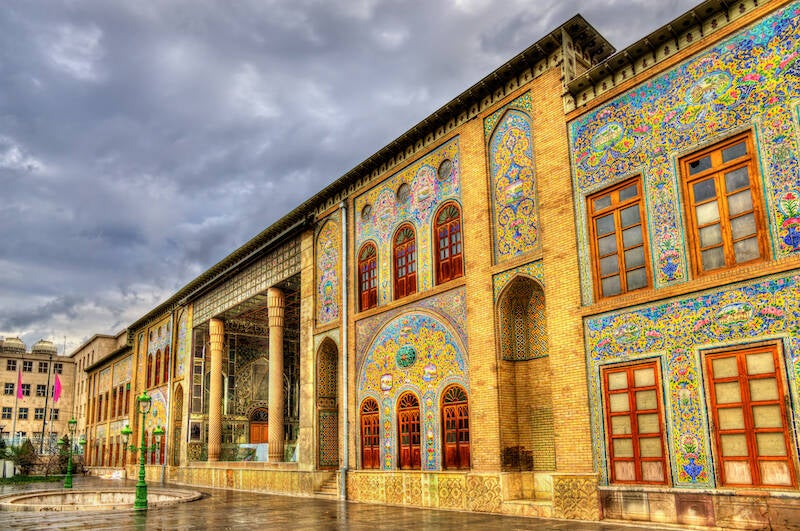
Day 2 – Discover Tehran: The Beating Heart of Iran
Your journey begins with a full-day exploration of Tehran, the vibrant capital of Iran and the largest metropolitan city in the Middle East. Known as the city that never sleeps, Tehran is a fascinating blend of tradition and modernity — a place where ancient heritage meets contemporary life.
Throughout its recent history, Tehran has been the stage for many of Iran’s most important political and cultural events. One day is hardly enough to uncover all its layers, but even a short visit reveals the city’s rich contrasts: from historic Qajar palaces to modern art galleries, from bustling bazaars to sleek shopping malls, and from mountain views to hip cafés and street food stalls.
For a classic Tehran city tour, we recommend starting with the National Museum of Iran. Divided into two sections — the Museum of Ancient Iran and the Museum of Islamic Art and Architecture — it offers an excellent introduction to the country’s long and diverse history. It’s the perfect starting point for understanding the treasures you’ll encounter throughout your journey in Iran.
Next, visit the magnificent Golestan Palace, one of Tehran’s oldest historical landmarks and a UNESCO World Heritage Site. Once the royal residence of the Qajar dynasty, this elegant complex includes 17 buildings, featuring palaces, halls, and museums. Inside, you’ll find exquisite examples of Persian craftsmanship alongside European artworks and gifts from the 18th and 19th centuries.
If time allows, make sure to stop by the Treasury of National Jewels — home to one of the most dazzling collections of gemstones in the world, each with a fascinating story.
Continue your exploration at the Tehran Grand Bazaar, one of the city’s most iconic attractions. Its vast network of corridors is divided by product type, creating a lively maze filled with carpets, spices, jewelry, and local crafts. This area represents the historic heart of Tehran and offers an authentic look into the city’s daily life.
To experience modern Tehran, head north to the Tabiat (Nature) Bridge, a contemporary architectural symbol connecting two large parks. It’s the perfect place to relax with a coffee, enjoy panoramic views, and watch how locals unwind after a busy day in the city.
These highlights are just a glimpse of what Tehran has to offer. Whether you’re passionate about history, architecture, or modern culture, this dynamic city will surprise you at every turn. For personalized recommendations or tailored city tours, feel free to contact our team — we’ll help you discover the Tehran that best matches your interests.
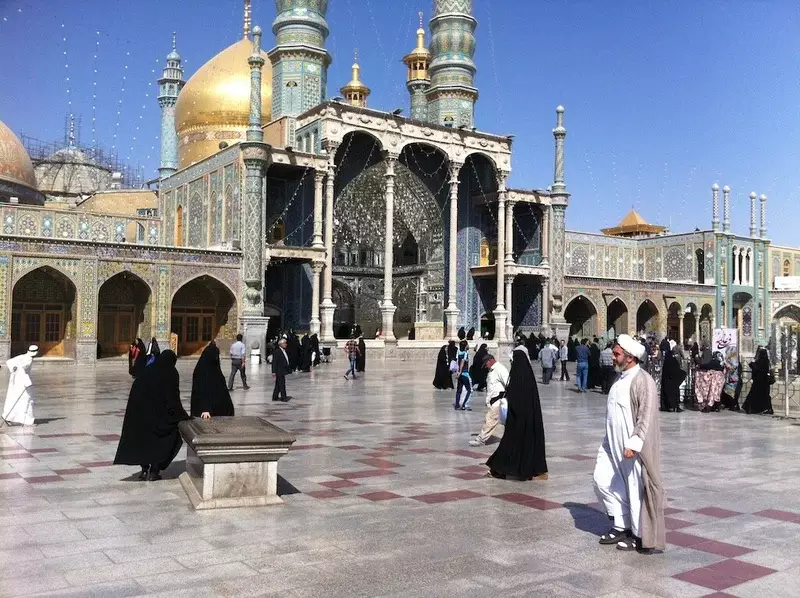
Day 3 – From Tehran to Kashan (Optional Stop in Qom)
Today you leave Tehran and head south toward Kashan, a city famous for its traditional Persian architecture and historic houses. On the way, you may choose to stop in Qom, one of Iran’s most important religious cities.
Qom is widely regarded as the center of the Islamic Revolution and is home to a large population of mullahs and Islamic scholars. The city is dominated by the magnificent Shrine of Hazrat-e Masumeh, sister of Imam Reza, which is one of the most significant pilgrimage sites for Shiite Muslims. Upon entering the shrine complex, you will immediately feel the spiritual atmosphere — women dressed in black chadors, mullahs in traditional attire, and thousands of pilgrims from across Central Asia and the Middle East create a scene of devotion and reverence. The mausoleum of Hazrat-e Masumeh sits at the heart of this vast complex, offering a profound cultural and spiritual experience.
In the evening, you will arrive in Kashan, a city renowned for its historical wealth and traditional Persian houses. You will stay in one of these beautifully restored historic houses, now transformed into a charming boutique hotel, offering an authentic experience of Kashani culture and hospitality.

Day 4 – Exploring the Historic City of Kashan
Today you will explore Kashan, a small oasis town famous for its elegant merchant houses and rich cultural heritage. The city is home to magnificent historic homes, each decorated with intricate stained-glass windows, frescoes, and ornate interiors, reflecting the wealth and taste of Kashan’s former merchants.
Nearby, you can visit the Tabatabai House, known for its colorful stained-glass windows and beautifully decorated rooms, and the Broujerdi House, the home of a samovar merchant, where masterpieces by the renowned Iranian artist Kamal-ol-Molk adorn the walls.
Also in the area is Hammam-e Sultan Ahmed, a former traditional bathhouse. While it no longer serves as a hammam, the site is a stunning example of Persian architecture, featuring multiple rooms adorned with vibrant colored tiles.
One of the highlights of Kashan is Fin Garden, a historic Persian garden whose origins predate the Safavid period and were developed further under Shah Abbas II, gaining recognition during the Qajar era. The garden is not only an architectural masterpiece but also a site of historical significance: it was here that Amir Kabir, the famed Qajar chancellor known for his wisdom and justice, was assassinated in 1852.
For a glimpse into even older history, a short trip to the Sialk Hill archaeological site in the outskirts of Kashan reveals a settlement dating back to 6000–5500 BC, providing a fascinating perspective on ancient Iranian civilization.
Return to your hotel in the city center, where you can relax in a charming courtyard, surrounded by trees and a central fountain. Enjoy a cup of tea or a refreshing cold herbal syrup, soaking in the serene atmosphere of traditional Kashan hospitality.
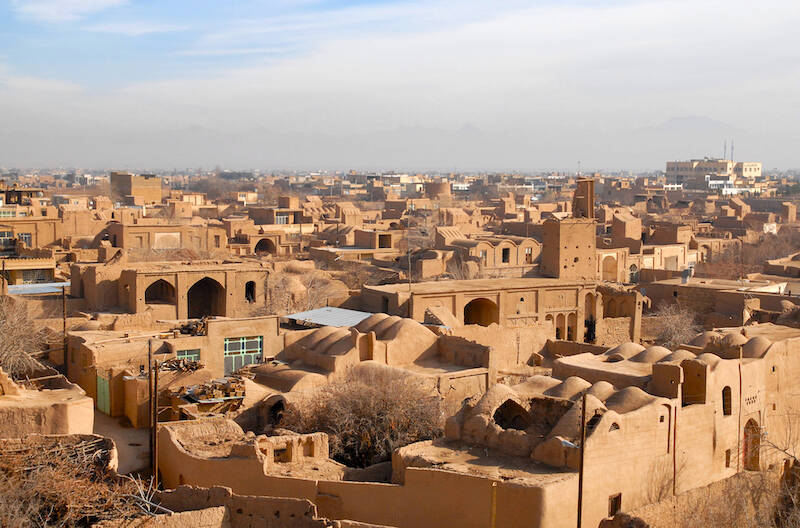
Day 5 – From Kashan to Yazd via Nain and Meybod
After breakfast, you will depart Kashan and travel toward Yazd, a desert city known for its ancient Persian architecture and Zoroastrian heritage. Along the way, there are a few remarkable stops worth visiting.
Your first stop is Nain, a historic desert town on the Iranian Plateau. Nain’s dry climate led ancient Iranians to develop ingenious underground aqueducts called qanats, which brought water from the mountains to the plains. Nain is one of the best places to explore these ancient water systems. The city also features several notable monuments, including the Jame Mosque of Nain, one of the oldest mosques in Iran, and is famous for its textile and carpet workshops.
Next, visit Meybod, a small desert city with a history dating back to the pre-Islamic era. Here, explore the ancient Narin Castle (Narin Ghaleh), which dates to the Sassanid dynasty, nearly 2,000 years ago. Meybod also features Safavid and Qajar-era sites, such as a historic caravanserai, Chapar Khaneh (postal service office), and the fascinating Meybod Ice Reservoir, an ingenious ancient cooling system. While strolling through the streets, you can also observe traditional ceramic and pottery workshops, showcasing Iran’s artisanal heritage.
In the evening, arrive in Yazd, where you will stay in a charming hotel and prepare to explore the city of windcatchers the following day.
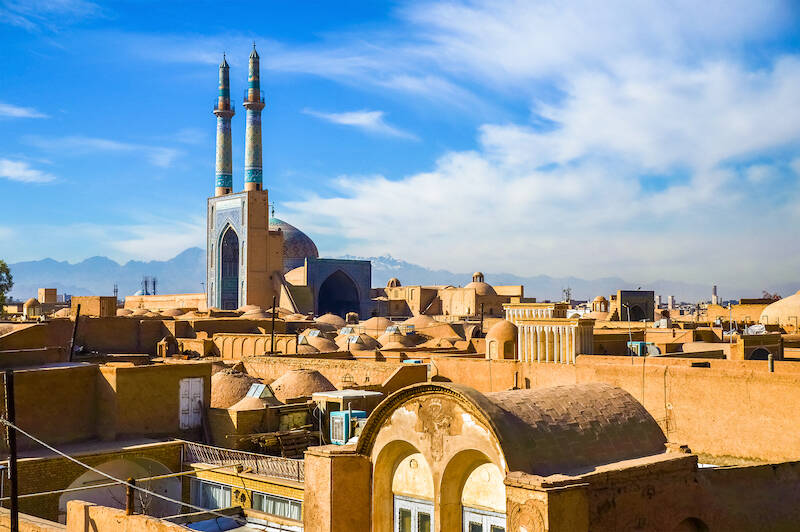
Day 6 – Exploring the Desert City of Yazd
Today you will discover Yazd, a city famous for its unique desert architecture and windcatcher houses (Badgirs), designed to provide natural ventilation and cool homes during the hot summer months.
Start your tour with a visit to the Zoroastrian Fire Temple, where the sacred fire is believed to have been burning continuously since around 470 AD. Yazd is home to a significant Zoroastrian community, making this temple an important cultural and spiritual site.
Next, explore Dowlat Abad Garden, a prime example of a Persian garden built for residential purposes. The garden features the tallest windcatcher in Iran, highlighting the ingenuity of Persian desert architecture.
In the afternoon, stroll through the old town of Yazd to visit the Jame Mosque and admire the striking Amir Chakhmaq façade, one of the city’s most iconic landmarks. Continue to the Yazd Bazaar, famous for its exquisite Termeh silk textiles, praised even by Marco Polo during his travels in 1272. Walking through the bazaar, enjoy the vibrant colors and traditional craftsmanship displayed in each shop.
In the evening, experience a visit to a Zurkhaneh, a traditional Persian gymnasium where Varzesh-e Bastani — an ancient system of athletics originally used to train warriors — is practiced. Witnessing this traditional sport offers a unique insight into the historical culture of Persia.
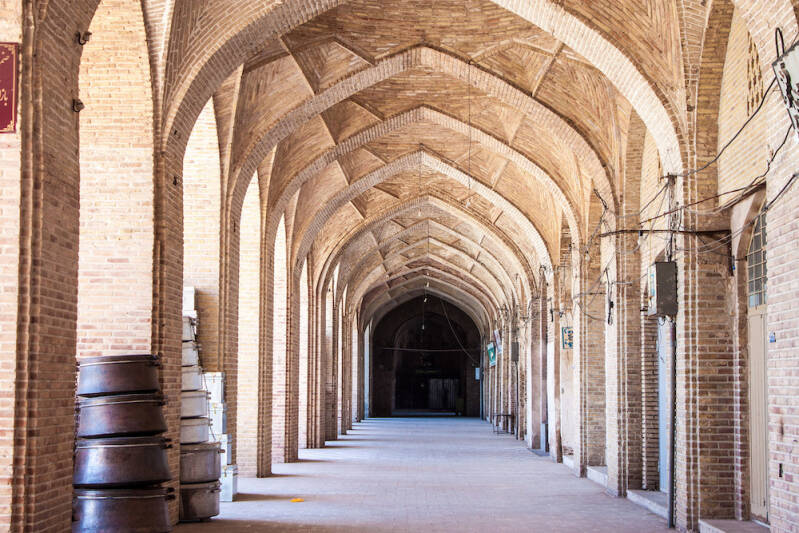
Day 7 – From Yazd to Kerman via Saryazd
Today you will travel from Yazd to Kerman, with an interesting stop along the way at the Saryazd Fortress. This historic fortress dates back to the Sassanid era and remains remarkably well-preserved. Historically, Saryazd Fortress served as a defensive structure to protect local populations from invasions and raids, offering a glimpse into Iran’s ancient military architecture.
In the afternoon, arrive in Kerman, one of the oldest cities in Iran, renowned for its rich cultural, historical, and architectural heritage. Explore the Ganjali Khan Complex, a beautifully preserved site that includes a square, mosque, bathhouse, bazaar, and caravanserai — a perfect example of Persian urban design and craftsmanship.
Conclude your day with a visit to the Bazaar of Kerman, famous for its unique architecture and vibrant atmosphere, where you can experience the local life, browse traditional crafts, and enjoy the sights and sounds of this historic Iranian city.

Day 8 – Kerman to Mahan with Excursion to Rayen
This morning, depart from Kerman and drive to Rayen to visit the Rayen Citadel (Arg-e Rayen), an ancient adobe fortress and one of the largest of its kind in the world. Often compared to the famous Bam Citadel, which was damaged by a massive earthquake, Arg-e Rayen remains remarkably well-preserved and offers a fascinating glimpse into Iran’s medieval defensive architecture.
After exploring Rayen, continue to Mahan, a city known for its historical and cultural attractions. Visit the Shah Nematollah Vali Shrine, a prominent complex dedicated to the famous Sufi mystic and poet Shah Nematollah Vali. Then explore the Shazdeh Garden (Prince’s Garden), a beautiful example of a Persian garden. Featuring terraced levels, water channels, and a central pavilion, Shazdeh Garden provides a refreshing retreat, especially during the warm seasons, and showcases the artistry and engineering of traditional Persian landscape design.

Day 9 – Mahan to Kerman with Excursion to Kaluts
Today offers an otherworldly experience exploring the Kaluts, one of Iran’s most unique natural landscapes.
Early in the morning, drive to Shafiabad Village, the last inhabited village before the Kaluts desert begins. From here, embark on a desert safari by 4x4 to explore the spectacular rock formations of Dasht-e Lut, shaped over thousands of years by erosion. These dramatic landscapes are recognized as one of the most unique natural phenomena on Earth, offering incredible photo opportunities and an unforgettable experience in the Iranian desert.
After a morning adventure in the Kaluts, enjoy a rest in a local homestay, immersing yourself in rural Iranian life. In the afternoon, drive back to Kerman for the night, reflecting on the surreal desert landscapes you have just explored.

Day 10 – From Kerman to Shiraz via Niriz and Sarvestan
Today, travel from Kerman to Shiraz, experiencing the diverse landscapes of southern Iran. The first part of the journey features desert scenery, including vast plains, sand dunes, and rocky formations. As you approach Shiraz, the terrain gradually changes to hilly and mountainous regions, passing agricultural areas with fig and pomegranate orchards, green oases, and possibly nomadic encampments, offering a glimpse of traditional Iranian life.
Along the way, stop to visit the Jame Mosque of Niriz, a historic mosque reflecting the region’s Islamic architectural heritage. Continue to Sarvestan to explore the Sassanid Palace, a remarkable example of pre-Islamic Persian architecture.
In the evening, arrive in Shiraz, ready to explore the city of poetry, gardens, and Zand dynasty history the following day.
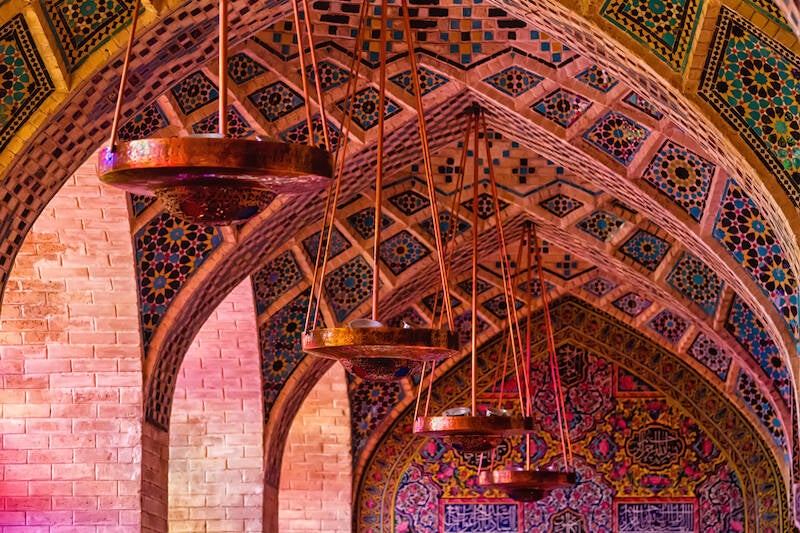
Day 11 – Exploring the Cultural and Poetic City of Shiraz
Shiraz, known as the City of Roses and Nightingales, has a rich heritage in Persian poetry and literature, having produced many of Iran’s most famous poets.
Start your morning with a visit to the Nasir al-Molk Mosque, famously known as the Pink Mosque due to its extensive use of pink-colored tiles in the interior. The morning light shining through the stained-glass windows creates a breathtaking spectacle, perfect for photography.
Since Shiraz was the capital during the Zand dynasty, continue to explore Karimkhan Complex, which includes the Arg-e Karimkhan, Vakil Bazaar, and Vakil Mosque, showcasing 18th-century Persian architecture and urban design.
Next, visit the tombs of two world-renowned Persian poets, Hafez and Sa’adi, paying tribute to the literary heritage that permeates the city. Then, stroll through Eram Garden, a classical Persian garden, particularly enchanting in May when the orange blossoms are in bloom.
In the evening, experience the vibrant city life of Shiraz. Locals enjoy picnics in green spaces, families gather together, children play, and the city’s restaurants and cafés with live music offer a perfect opportunity to savor local cuisine and immerse yourself in Shiraz’s lively atmosphere.

Day 12 – Shiraz Excursion: Persepolis and Naghsh-e Rostam
Today, embark on a journey to the glory of the Persian Empire at Persepolis, the ceremonial capital of the Achaemenid Empire. Located at the foothills of Rahmat Mountain, Persepolis was primarily built during the reign of Darius I and served as a spring and summer royal residence. The city was intended as a ceremonial center where representatives from subject states came to pay tribute to the king.
Explore the nine main structures of Persepolis, many of which have survived invasions and natural events. Highlights include the Gate of All Nations, the Apadana Staircase and Palace, the Palace of Darius I, the Palace of Xerxes, and other structures associated with the Achaemenid kings.
Not far from Persepolis is Naghsh-e Rostam, the necropolis of the Achaemenid dynasty. This impressive site features four monumental rock-cut tombs carved high into the cliff face, along with Sassanid-era reliefs below the tombs. Visiting these sites offers an unforgettable insight into ancient Persian history and architecture, making it a highlight of any Shiraz day trip.
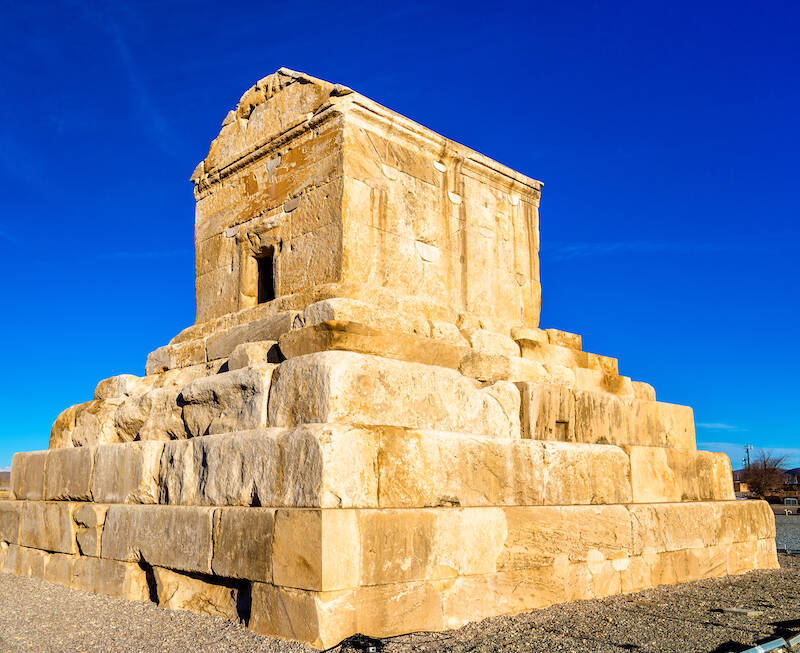
Day 13 – Shiraz to Isfahan via Pasargadae
Today, continue your journey from Shiraz to the paradise of Iranian-Islamic art and architecture, Isfahan, with an important historical stop at Pasargadae.
Pasargadae, the first capital of the Achaemenid Empire, was built by order of Cyrus the Great. The most significant monument here is the Tomb of Cyrus the Great, an iconic symbol of Persian history and architectural mastery. Visiting Pasargadae provides a unique opportunity to connect with the ancient Persian Empire and understand its historical significance.
In the afternoon, arrive in Isfahan, often called an open-air museum due to its stunning Persian-Islamic architecture. You will have time to explore the city center on foot or take a panoramic city tour, followed by dinner at one of Isfahan’s cozy restaurants, enjoying local cuisine in this vibrant cultural hub.
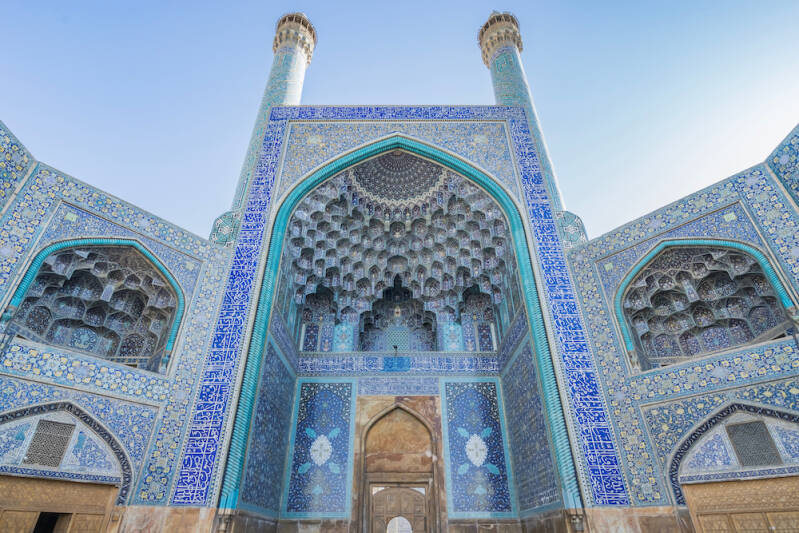
Day 14 – Exploring the Splendid City of Isfahan
Today, begin your tour in the amazing city of Isfahan, walking along boulevards surrounded by beautiful gardens and masterpieces of Persian-Islamic architecture.
Start at Naghsh-e Jahan Square, one of the largest city squares in the world and a true highlight of Safavid-era architecture. On the eastern side of the square, visit Sheikh Lotfollah Mosque, originally built as a private mosque for the royal court by Shah Abbas I.
On the south side of the square is the Imam Mosque (formerly Shah Mosque), considered one of the finest examples of Persian Islamic architecture, also commissioned by Shah Abbas I. Opposite Sheikh Lotfollah Mosque, you will find the imperial Ali Qapu Palace, showcasing the best of Safavid art and architectural design.
Continue your exploration with a visit to Qeysarie Bazaar, one of the oldest bazaars in Isfahan, famous for its high vaulted ceilings, intricate paintings, and traditional shops. It’s the perfect place to shop for Persian carpets, handicrafts, and souvenirs, or enjoy a cup of tea in a traditional tea house.
In the afternoon, visit Chehel Sotoun, a stunning pavilion built by Shah Abbas II in the middle of a park, originally used for royal entertainment and ceremonies.
In the evening, enjoy Isfahan at your own pace, dining in one of the many local restaurants serving high-quality Persian cuisine. No matter where your hotel is located, excellent dining options are always nearby.
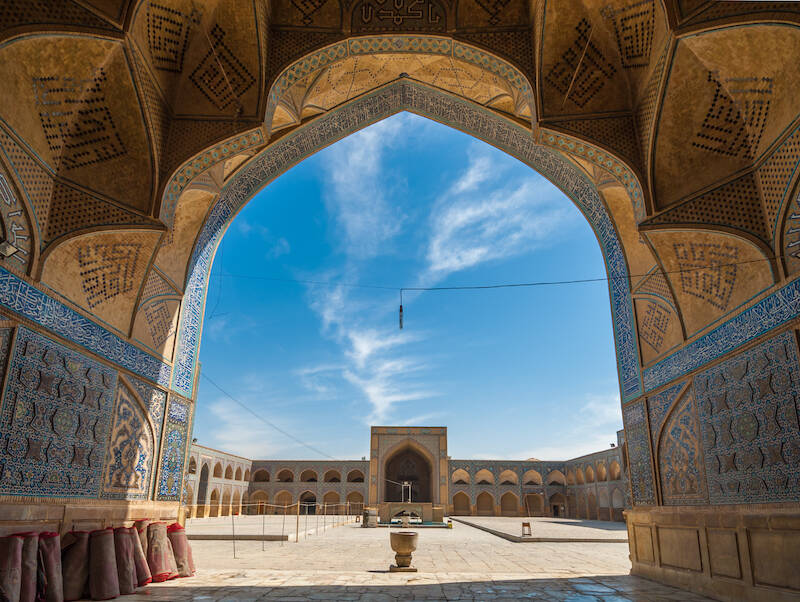
Day 15 – Discovering Isfahan: Bridges, Jolfa, and Armenian Heritage
Wake up in Isfahan, with your mind still filled with the memories of the city’s eslimi patterns, miniatures, and frescoes. Today, continue exploring one of Iran’s most beautiful cities, starting with its iconic Zayandehroud River, the largest river of the Iranian Plateau.
Cross the river to visit two of Isfahan’s historic bridges, among the most stunning in Iran. First, the Allahverdikhan Bridge, popularly known as Si-o Se Pol, is the largest bridge over the river. Then, visit the Khaju Bridge, described by Arthur Pope and Jean Chardin as “the culminating monument of Persian bridge architecture,” combining utility, beauty, and rhythm in perfect harmony.
Next, explore Jolfa, the historic Armenian Quarter of Isfahan. Visit Vank Cathedral and its museum, witnessing a fascinating blend of Persian and Armenian architectural styles. Wander through the streets and alleys of Jolfa, where the aroma of coffee fills the air. Stop at one of the many coffee bars, or enjoy street food and local restaurants, soaking up the lively evening atmosphere.
Jolfa is the perfect place to experience the cultural diversity of Isfahan, where history, art, and modern life come together in a vibrant setting.
Day 16 – Departure from Isfahan
On your final day, an escorted transfer to Isfahan International Airport will be arranged according to your flight schedule. Say goodbye to Isfahan and all the incredible sights you have explored across Iran, taking with you unforgettable memories of Persian history, culture, and hospitality. Have a safe and pleasant flight.