

Iran Off the Beaten Track Tour : Tehran, Alamut, Soltaniyeh, Takht e Suleyman, Sanandaj, Howraman, Kermanshah, Khoramabad, Shustar, Ahvaz

Day 1 – Arrival Tehran
You arrive in the capital city of Iran, Tehran, where you will be met at the airport by our representative. After a warm welcome, you will be assisted through arrival formalities and escorted to your hotel for check-in. The rest of the day is free to rest after your flight or take a first walk in the bustling metropolis.


Day 2 Discover Tehran: The Beating Heart of Iran
Your journey begins with a full-day exploration of Tehran, the vibrant capital of Iran and the largest metropolitan city in the Middle East. Known as the city that never sleeps, Tehran is a fascinating blend of tradition and modernity — a place where ancient heritage meets contemporary life.
Throughout its recent history, Tehran has been the stage for many of Iran’s most important political and cultural events. One day is hardly enough to uncover all its layers, but even a short visit reveals the city’s rich contrasts: from historic Qajar palaces to modern art galleries, from bustling bazaars to sleek shopping malls, and from mountain views to hip cafés and street food stalls.
For a classic Tehran city tour, we recommend starting with the National Museum of Iran. Divided into two sections — the Museum of Ancient Iran and the Museum of Islamic Art and Architecture — it offers an excellent introduction to the country’s long and diverse history. It’s the perfect starting point for understanding the treasures you’ll encounter throughout your journey in Iran.
Next, visit the magnificent Golestan Palace, one of Tehran’s oldest historical landmarks and a UNESCO World Heritage Site. Once the royal residence of the Qajar dynasty, this elegant complex includes 17 buildings, featuring palaces, halls, and museums. Inside, you’ll find exquisite examples of Persian craftsmanship alongside European artworks and gifts from the 18th and 19th centuries.
If time allows, make sure to stop by the Treasury of National Jewels — home to one of the most dazzling collections of gemstones in the world, each with a fascinating story.
Continue your exploration at the Tehran Grand Bazaar, one of the city’s most iconic attractions. Its vast network of corridors is divided by product type, creating a lively maze filled with carpets, spices, jewelry, and local crafts. This area represents the historic heart of Tehran and offers an authentic look into the city’s daily life.
To experience modern Tehran, head north to the Tabiat (Nature) Bridge, a contemporary architectural symbol connecting two large parks. It’s the perfect place to relax with a coffee, enjoy panoramic views, and watch how locals unwind after a busy day in the city.
These highlights are just a glimpse of what Tehran has to offer. Whether you’re passionate about history, architecture, or modern culture, this dynamic city will surprise you at every turn. For personalized recommendations or tailored city tours, feel free to contact our team — we’ll help you discover the Tehran that best matches your interests.

Day 3 – From Tehran to the Legendary Alamut Valley via Qazvin
Your adventure truly begins today as you leave the capital behind and set out toward the Valley of Alamut, one of Iran’s most dramatic and legendary landscapes. The journey takes you across the majestic Alborz Mountains, offering spectacular views of rugged peaks, deep valleys, and winding mountain roads.
On the way, you’ll stop in Qazvin, one of Iran’s oldest and most historically significant cities. Once the capital of the Persian Empire during the Safavid era, Qazvin is rich in architecture and culture. Here, you’ll visit the ancient city gate, the impressive Jameh Mosque, and the beautifully decorated Shrine of Shazdeh Hossein — an important pilgrimage site that reflects Iran’s deep spiritual traditions.
From Qazvin, the road to Alamut Valley winds through breathtaking mountain scenery, small rural villages, and terraced fields. The deeper you go, the more you feel the isolation and mystery that surround this remote region — once home to the fabled Assassins’ Castles.
This scenic drive sets the stage for the next chapter of your journey, where history, nature, and adventure meet in one of the most enchanting regions of northern Iran.

Day 4 – Exploring the Legendary Alamut Valley
Today you’ll discover one of the most fascinating and mysterious places in Iran — the Alamut Valley, a land of legends, breathtaking landscapes, and ancient fortresses.
The Alamut region is forever linked to the legendary story of the Assassins, or Hashashin, a secretive sect that once ruled this remote mountain area during the Middle Ages. According to legend, its warriors were sent into battle under the influence of hashish — giving rise to the term “Assassins.” Whether true or not, their impregnable castles still stand as silent witnesses to a dramatic part of Persian history.
The castles of Alamut and Shahrud valleys can still be explored today. Reaching them is an adventure in itself — the journey winds through rugged mountain terrain, with striking ochre-colored cliffs, green valleys, and charming mountain villages along the way.
You’ll have plenty of time today to explore several of these historic fortresses, including the famous Alamut Castle, perched dramatically on a rocky peak. You can explore the valley by car, but for those who enjoy the outdoors, hiking through Alamut offers unforgettable views and a chance to experience the raw beauty of the Iranian highlands up close.
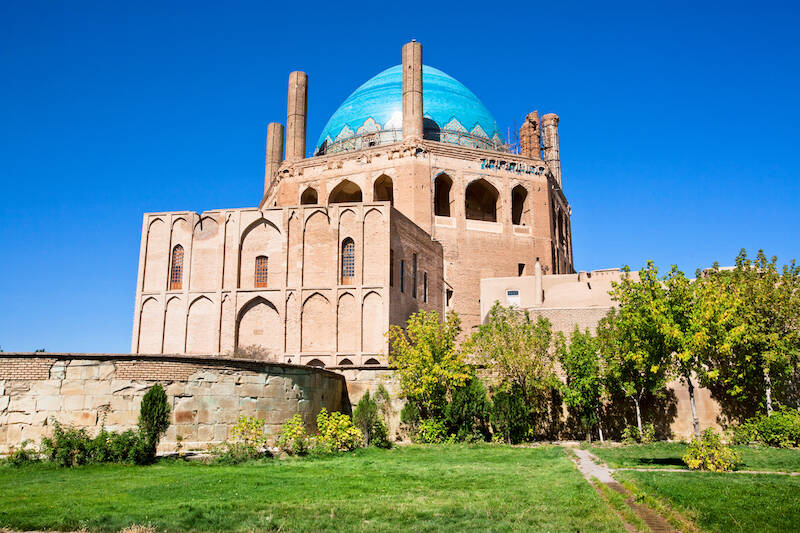
Day 5 – From Alamut to Takab via Soltaniyeh
Today your journey continues from the remote Alamut Valley back toward the main highway near Qazvin, as you travel deeper into Iran’s historical heartland. Along the way, you’ll visit one of the country’s most remarkable architectural landmarks — the Mausoleum of Oljaitu in Soltaniyeh.
Built during the Mongol period in the 14th century, when Soltaniyeh briefly served as the capital of Iran, this monumental structure is crowned by the Dome of Soltaniyeh — one of the largest brick domes in the world. Recognized as a UNESCO World Heritage Site, it stands as a masterpiece of Persian-Islamic architecture and an important link between early Persian and later Ottoman design.
You’ll then continue toward Qazvin, where you can once again explore its rich architectural and religious heritage. Highlights include the ancient city gate, the grand Jameh Mosque, and the Shrine of Shazdeh Hossein, all reflecting Qazvin’s historic role as a political and cultural center during the Safavid era.
Your final stop for the day is Takab, a small and quiet town that mainly serves as a comfortable base for travelers heading toward the Takht-e Soleyman archaeological site — one of Iran’s most extraordinary historical and natural wonders, which you’ll explore next.

Day 6 – From Takab to Sanandaj via Takht-e Soleyman
This morning you’ll visit one of Iran’s most significant historical and archaeological sites: Takht-e Soleyman, also known as the Throne of Solomon. Surrounded by volcanic mountains and natural springs, this impressive site holds the remains of an ancient fortress and sacred temples that date back to the Achaemenid, Parthian, and Sassanid eras.
A place of deep spiritual and mythological importance, Takht-e Soleyman was once a major center of worship for Zoroastrianism. Within the vast complex, you’ll find the ruins of fire temples, royal palaces, and the mystical Lake of Fire, which has been bubbling with mineral-rich water for thousands of years.
Recognized as one of Iran’s 24 UNESCO World Heritage Sites, Takht-e Soleyman beautifully combines natural beauty with human history, offering a powerful insight into the country’s ancient civilizations. Take your time to explore the site, walk among the ruins, and imagine the grandeur of what was once a royal sanctuary and religious hub.
After your visit, continue your journey westward into Iranian Kurdistan, a region known for its mountainous landscapes, unique culture, and warm hospitality. You’ll arrive in Sanandaj, the lively provincial capital, where colorful bazaars, traditional music, and Kurdish handicrafts create a vibrant atmosphere that contrasts beautifully with the serenity of the morning’s archaeological exploration.

Day 7 – Discovering Sanandaj and the Heart of Iranian Kurdistan
Today you explore one of Iran’s most beautiful and culturally rich regions — the mountainous landscapes of Kurdistan. Known for its stunning scenery, traditional villages, and vibrant culture, this area offers travelers a unique insight into Kurdish life.
The Kurdish people are easily recognizable by their traditional attire: men often wear baggy trousers, while women wear colorful dresses and headscarves that reflect their rich cultural heritage. Hospitality is a hallmark of this region, and visitors are warmly welcomed in both cities and remote mountain villages.
Your day begins in Sanandaj, the lively provincial capital of Iranian Kurdistan. The city is famous for its bustling bazaar, where locals sell everything from handicrafts and textiles to spices and fresh produce. Walking through the market is a fantastic way to immerse yourself in the local culture and witness daily life in a Kurdish city.
In addition to the bazaar, a visit to the Asef Mansion is highly recommended. This historic house has been converted into a museum dedicated to Kurdish culture, showcasing traditional clothing, musical instruments, and regional crafts. Nearby, the Sanandaj Regional Museum offers further insight into the history, art, and traditions of the Kurdish people.
Today is a day of culture, colors, and mountain charm, providing a perfect balance of city life and a glimpse into the authentic rural landscapes of Iranian Kurdistan.

Day 8 – From Sanandaj to Howraman-e Takht via Negel and Marivan
Today you journey deeper into the rugged mountains of Iranian Kurdistan, where remote valleys hide some of the most picturesque Kurdish villages in Iran. Your destination is Howraman-e Takht, a historic village perched high in the mountains, but first, a few fascinating stops along the way.
Begin with a brief visit to the small town of Negel, known for its historic mosque, which houses one of the oldest Korans in the world. This remarkable artifact reflects the region’s rich religious and cultural history.
Next, you’ll drive to Marivan, a scenic town situated by a large lake near the border with Iraq. This beautiful lake is a popular spot for picnics and relaxation. Here you can enjoy local seafood at lakeside restaurants and take in the peaceful mountain views before continuing into the highlands.
The journey then leads into the Ouraman region, known for its dramatic landscapes, steep valleys, and terraced villages. The highest village, Ouraman-e Takht, will be your home for the night. After a few hours of driving, you enter the valley of Howraman-e Takht, a stunning area where traditional Kurdish culture thrives amidst breathtaking scenery.
On the outskirts of the village, you’ll encounter an ancient spiritual site, where non-Islamic celebrations and rituals still take place. Colorful ribbons tied to trees mark the sacred space, a tradition shared across various faiths and spiritual practices.
The rest of the day is yours to explore Howraman-e Takht at your own pace. Stroll through the village, visit the small bazaar, see the mosque, and enjoy the warm hospitality of the friendly Kurdish residents. You’ll spend the night in a simple, comfortable hotel on the edge of the village, surrounded by the serene beauty of the mountains.

Day 9 – From Howraman to Kermanshah
Today promises a scenic journey through the mountains of Iranian Kurdistan, offering panoramic views of the rugged terrain and glimpses of Iraqi Kurdistan across the border. The route winds through hilly landscapes, terraced villages, and traditional Kurdish farmlands, providing insight into daily life in this remote region.
Along the way, you’ll pass through Paveh, the largest town in the area, where you can enjoy a brief stop to stretch your legs and take in the charming mountain scenery.
Your journey concludes in Kermanshah, the largest city of Iranian Kurdistan. Known for its rich history, vibrant culture, and welcoming locals, Kermanshah serves as a perfect base to explore the region’s ancient monuments, bustling bazaars, and traditional cuisine.
This day combines breathtaking mountain landscapes with a taste of urban Kurdish life, preparing you for the cultural highlights of Kermanshah in the coming days.

Day 10 – Exploring Kermanshah: Takht-e Bustan and Bisotun
Today you will explore some of Iran’s most remarkable ancient sites near Kermanshah, where history and art meet in spectacular rock reliefs and inscriptions.
Start your day at Takht-e Bustan, a stunning collection of Sassanid-era rock reliefs dating back to the 4th century. Here, you can admire intricately carved depictions of kings Ardashir II and Shapur II, as well as ceremonial scenes and hunting motifs that reflect the grandeur of the Sassanid dynasty. The site is not only an artistic masterpiece but also a window into the social and political life of ancient Persia.
Next, continue to Bisotun, located along the ancient trade route connecting Ecbatana (modern-day Hamadan) and Babylon. Bisotun is home to the famous relief of King Darius I of the Achaemenid Empire, inscribed with cuneiform writing that chronicles the king’s victories. This UNESCO World Heritage Site is a must-see for anyone interested in Persian history, archaeology, and ancient art, offering a remarkable glimpse into Iran’s imperial past.
These two sites together make for a fascinating day of history, archaeology, and culture, perfectly showcasing the richness of Kermanshah’s heritage.

Day 11 – From Kermanshah to Khoramabad
Today you leave Kermanshah and journey into the province of Lorestan, a region known for its mountains, rivers, and nomadic heritage. Lorestan is home to the Lurs, one of Iran’s many nomadic tribes, whose traditional lifestyle and hospitality offer a fascinating glimpse into rural Iranian culture.
Your day ends in Khoramabad, the provincial capital, where the town is dominated by the impressive Falak-ol-Aflak Fortress. This ancient fortress, perched on a hill overlooking the city, dates back centuries and provides a striking introduction to Lorestan’s rich history. Strolling around Khoramabad, you’ll see how tradition and modern life coexist, setting the stage for your exploration of the province in the coming days.

Day 12 – From Khoramabad to Shustar: Entering Khuzestan
Today you travel to Khuzestan, one of Iran’s least-visited but most fascinating provinces. Located in the southwest corner of the country, Khuzestan is known for its hot climate, oil and gas industry, and rich cultural heritage. While the region was heavily affected during the Iran-Iraq war and often overlooked by tourists, it holds a wealth of historic, cultural, and natural attractions.
Khuzestan is home to a vibrant Arab culture and serves as the winter residence of the Bakhtiari nomads, who migrate seasonally through the Zagros Mountains. The province also hosts several UNESCO World Heritage Sites, including Choqa Zanbil, Shustar, and Shush (Susa), offering a unique glimpse into Iran’s ancient civilizations.
Your first stop is Shustar, a historic town renowned for its remarkable ancient hydraulic system, built as early as the 5th century BCE. Over the centuries, this sophisticated network of canals, dams, and watermills was extended and refined. The system still operates in parts, with watermills powered by flowing water used to grind corn and rice. Walking through Shustar, you’ll see how ingenuity and engineering from millennia ago continue to shape the town’s landscape, making it one of Khuzestan’s most fascinating destinations.

Day 13 – From Shustar to Ahvaz via Susa and Choqa Zanbil
This morning, you will explore the rich history of Khuzestan, visiting two of the province’s most remarkable UNESCO World Heritage Sites: Choqa Zanbil and Shush (Susa).
In Shush, you can visit the archaeological excavations and the Mausoleum of Daniel, built in the distinctive style of Khuzestan. The site provides a fascinating glimpse into the ancient civilizations that once thrived in this region. From there, you will continue through the Haft Teppe excavations to reach the impressive ziggurat of Choqa Zanbil, one of the few remaining ziggurats in the world, constructed in the 13th century BCE. Walking among these ancient monuments, you can feel the grandeur of Elamite civilization and its influence on later cultures.
In the afternoon, you will drive to Ahvaz, the capital of Khuzestan. The city offers a vibrant mix of modern life and cultural heritage. A stroll through the bustling bazaar reveals locals selling fish, vegetables, and traditional goods, while nearby streets offer an authentic taste of daily life. Along the Karun River, the city’s lifeline, people gather for picnics or a cup of tea, making it a perfect spot to relax and observe the rhythm of life in southwestern Iran.
This day combines ancient history, archaeology, and modern city culture, highlighting the diversity and depth of Khuzestan Province.

Day 14 – Exploring Southern Khuzestan: Shadegan Lagoon, Minoo Island, and the Marsh Arabs
Today you will explore the southern regions of Khuzestan, gaining insight into the disappearing culture of the Marsh Arabs. Your first stop is the Shadegan Lagoon, a protected nature reserve featuring an extensive network of waterways, small islands, and villages. Many Arabs still live in the area, preserving traditions similar to those of the Marsh Arabs of Iraq, famously described by Wilfred Thesiger. However, this unique way of life is slowly vanishing due to modern development, environmental changes, and population shifts.
From a nearby village near Darkhovin, you can explore the lagoon by boat. As you cruise through the waterways, you’ll see fishermen at work, water birds, small creeks, and fishing nets, and catch glimpses of the traditional mozif houses — round, cane structures central to local Arab culture. Mozifs historically served as guest houses, community centers, and informal caravanserais, where travelers could stay up to three days at the host’s expense, and village elders gathered to discuss important matters. Entering a mozif involves bending through the low entrance as a sign of respect, and the rituals of coffee and tea remain central to social life.
Next, you will visit Abadan and Minoo Island, once a lush paradise of date palms along the Shatt al-Arab River. The island suffered heavy damage during the Iran-Iraq war, but several reconstructed mozifs now welcome visitors. Here, you can experience traditional Arab hospitality, take part in a coffee and tea ceremony, and enjoy delicious Arab sweets. This is a rare opportunity to immerse yourself in a culture that is quickly disappearing yet still vibrantly alive in pockets of Khuzestan.
At the end of the day, you return to Ahvaz, reflecting on the rich history, unique traditions, and natural beauty of southern Khuzestan.

Day 15 depart Ahvaz
An escorted transfer based on your flight time will be arranged to the airport…. Have a safe flight