

Iran and Armenia Program
Day 1 Arrival Isfahan
Arrive at Isfahan international airport. You will met & assisted with our representative and transfer to hotel

Day 2 Explore the Splendid City of Isfahan
Your journey continues in the magnificent city of Isfahan, often described as “half of the world” for its stunning beauty and rich history. Stroll along tree-lined boulevards surrounded by elegant gardens and marvel at the city’s masterpieces of Persian–Islamic architecture.
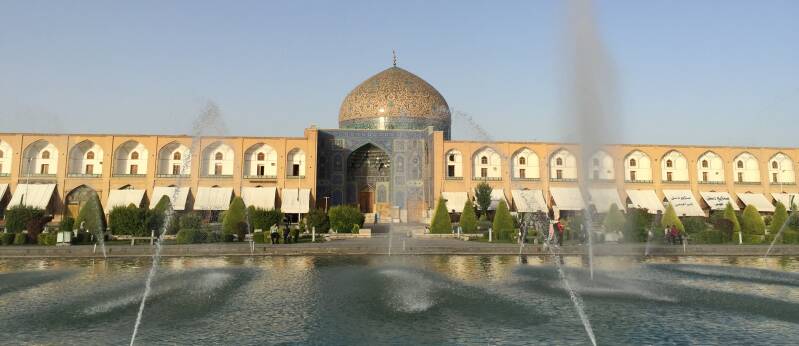
The highlight of your Isfahan city tour begins at Naghsh-e Jahan Square, one of the largest and most beautiful squares in the world. Built during the Safavid dynasty, this UNESCO World Heritage Site is surrounded by remarkable monuments that reflect the glory of Persian art and architecture.
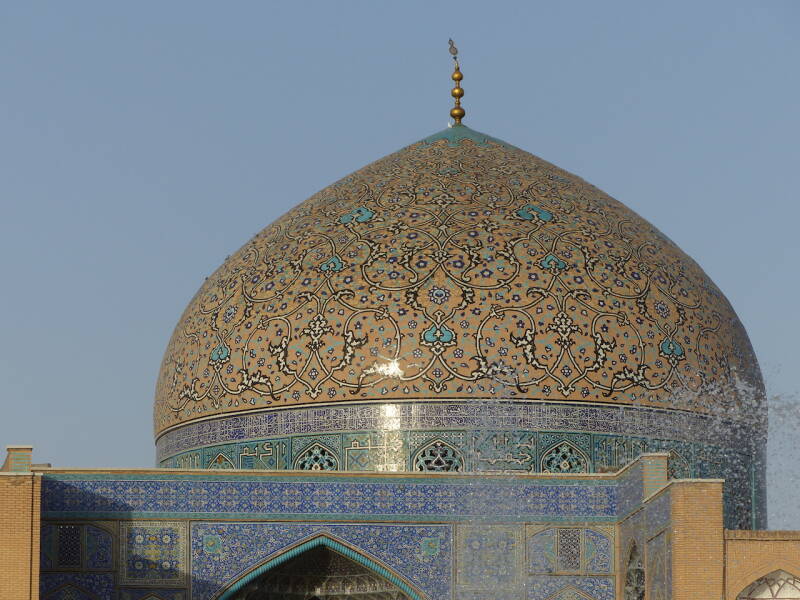
On the eastern side of the square, visit the Sheikh Lotfollah Mosque, built under Shah Abbas I as a private mosque for the royal court. Its delicate tilework and dome are among the finest examples of Islamic design.
Next, explore the Imam Mosque (formerly the Shah Mosque) on the southern side of the square. Commissioned by Shah Abbas I, this architectural masterpiece is renowned for its grand entrance portal, intricate mosaics, and spiritual atmosphere.
Opposite the Sheikh Lotfollah Mosque stands the Ali Qapu Palace, once the ceremonial gateway to the royal complex. Climb up to the music hall to enjoy spectacular views of the square and admire the exquisite frescoes and wooden ceilings — a true gem of Safavid art.
Continue your exploration at the Qeysarieh Bazaar on the north side of the square, one of Isfahan’s oldest and most vibrant markets. Step through its beautifully painted entrance and wander beneath high vaulted ceilings adorned with detailed artwork. Here you can shop for Persian carpets, miniature paintings, calligraphy, ceramics, and tile work, or relax in a traditional teahouse for a refreshing break.
In the afternoon, visit Chehel Sotoun Palace (The Palace of Forty Columns), built under Shah Abbas II as a royal pavilion and reception hall. Set in the middle of a peaceful park, the palace is famous for its stunning frescoes and mirror work. Take your time to admire the paintings that each tell a story of Persian history, then enjoy a cup of tea in the garden’s serene atmosphere.
In the evening, enjoy dinner at one of Isfahan’s many local restaurants. Whether you choose a traditional Persian eatery or a modern venue, you’ll find excellent food and warm hospitality wherever you go.
Day 3 The Bridges and Culture of Isfahan
You wake up once again in the enchanting city of Isfahan, your mind still filled with dreams of intricate eslimi patterns, delicate miniature paintings, and colorful Persian frescoes. A new day awaits, full of beauty and discovery.
One of the city’s most iconic features is the Zayandehrood River, the largest river on the Iranian Plateau. Wherever there is a river, there are bridges—and Isfahan’s bridges are among the most beautiful in the world. There are eleven historical bridges crossing the Zayandehrood, and today you will visit two of the most famous ones.
First, explore the Allahverdi Khan Bridge, better known as Si-o-se Pol, meaning “Bridge of 33 Arches.” This remarkable structure is the largest of Isfahan’s bridges and a masterpiece of Safavid engineering. Its graceful arches and symmetrical design make it one of the city’s most photographed landmarks.
Next, visit the Khaju Bridge, often described by art historians Arthur Pope and Jean Chardin as “the culminating monument of Persian bridge architecture.” The bridge perfectly combines utility, beauty, and harmony, serving as both a functional crossing and a place for recreation and gathering. The rhythmic arches and elegant symmetry of Khaju make it a must-see for anyone interested in Persian architecture.
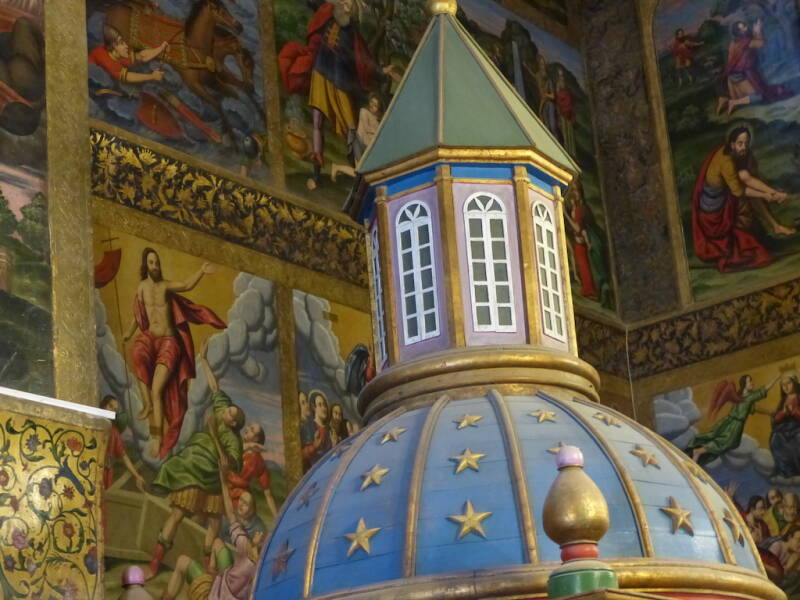
Your afternoon takes you to the Armenian Quarter of Jolfa, a vibrant district that reflects Isfahan’s cultural diversity. Here you’ll visit the Vank Cathedral, one of the most beautiful churches in the Middle East, known for its magnificent frescoes, golden details, and fascinating museum showcasing the history of Armenia in Iran.
As you stroll through Jolfa’s charming alleys, you’ll notice the aroma of freshly brewed coffee drifting through the air—this neighborhood is full of cozy cafés and coffee bars, perfect for a relaxing break.
In the evening, Jolfa transforms into one of the liveliest areas of the city. Locals and visitors gather to enjoy street food, boutique restaurants, and a youthful atmosphere. It’s the perfect place to end your day, soaking up the warm and welcoming spirit of Isfahan.

Day 4 Discover the Historic City of Tabriz
Today, you’ll fly to the western part of Iran to explore the vibrant city of Tabriz, one of the country’s oldest and most culturally rich destinations. After arrival, the rest of the day is yours to discover the city at your own pace.
Take a leisurely stroll through Tabriz’s lively streets, where modern life blends seamlessly with centuries of history. You can wander through trendy shopping avenues, explore local markets, or visit the city’s cultural landmarks.
The highlight of Tabriz is its Grand Bazaar, a UNESCO World Heritage Site and the largest covered bazaar in Iran. Lose yourself in its maze of brick vaults, bustling courtyards, and colorful shops selling everything from Persian carpets and spices to gold jewelry and handicrafts. The atmosphere here captures the true spirit of Iranian trade and tradition.
Another must-see is the Masjed-e Kabud, or Blue Mosque, an architectural masterpiece dating back to the 15th century. Its intricate turquoise tilework and geometric patterns make it one of the most stunning examples of Persian–Islamic design.
You can also visit the Armenian Church of Tabriz, a reminder of the city’s multicultural history and long-standing Armenian community.
To unwind, head to Bagh-e Melli (National Garden), located in the eastern part of the city. This peaceful park, with its large pond and landscaped pathways, is a favorite gathering spot for Iranian families — a perfect place to relax and enjoy the local atmosphere after a day of exploration.

Day 5 The Cave Village of Kandovan
This morning, you’ll take a scenic one-hour drive from Tabriz to Kandovan, one of the most unique destinations in Iran. Nestled in the volcanic slopes of Mount Sahand, Kandovan Village is famous for its extraordinary ‘troglodyte’ cave dwellings, entirely carved into soft volcanic rock.
Often compared to Cappadocia in Turkey, Kandovan offers a magical landscape of cone-shaped formations that have been inhabited for more than 700 years. The village is still home to local families who live in these ancient rock houses, creating a rare and authentic glimpse into a traditional way of life that continues to this day.
As you wander through the narrow alleys, you’ll find small shops selling local honey, dried fruits, and handicrafts, while the views over the rocky valley are truly unforgettable.
Tonight, you’ll experience something truly special — an overnight stay in a cave hotel, where modern comfort meets centuries-old tradition. Falling asleep surrounded by natural stone walls offers an unforgettable and authentic end to your day in this remarkable cave village of Iran.

Day 6 The Sacred Lake of Urmieh and the Legacy of Ancient Empires
Today, you’ll drive to the historic city of Urmieh (or Urmia), beautifully located near Lake Urmieh, one of the largest salt lakes in the Middle East. This shimmering body of water is not only a natural wonder but also one of the three holy lakes of the ancient Armenian Empire, along with Lake Sevan in Armenia and Lake Van in Turkey.
The region around Lake Urmieh is steeped in history. It was once part of the ancient Urartu Empire, one of the earliest kingdoms in the region, dating back to the first millennium BC. As you explore the area, you’ll come across numerous historic Armenian churches and monasteries scattered along the lake’s shores — reminders of the area’s deep cultural and spiritual heritage.
Nearby lies the town of Maragheh, which once served as the capital of the Mongol Empire under Hulagu Khan, grandson of Genghis Khan. Here, you can visit the 13th-century Maragheh Observatory, one of the most advanced astronomical centers of its time, where early scientists mapped the stars and studied the cosmos.
Another highlight is the Gonbad-e Kabud (“Blue Dome”), an impressive brick tower and tomb adorned with geometric patterns and turquoise tiles — a fine example of Ilkhanid architecture.
This day offers a fascinating blend of natural beauty, ancient history, and architectural wonder, showcasing the diversity and depth of Iran’s cultural heritage.

Day 7 The Sacred St. Thaddeus Church and the Borderlands of Maku
Today, your journey takes you to the remote border region of Maku, near Turkey and Nakhichevan, where dramatic landscapes and deep history converge. As you drive through this rugged part of northwestern Iran, you may catch a glimpse of the majestic Mount Ararat, rising just across the Turkish border — a sight that has inspired countless legends throughout history.
Your first stop will be the village of Bastam, once an important stronghold of the Urartu Empire, which flourished in this region nearly 3,000 years ago. The ruins and remnants here offer a fascinating glimpse into the ancient civilizations that once ruled these lands.
A true highlight of your journey follows — a visit to the Armenian Church of St. Thaddeus, also known as Qara Kelisa or the Black Church. Built upon original foundations dating back to 68 AD, this is considered one of the oldest churches in the world. Its striking black-and-white stone structure stands in beautiful contrast with the surrounding mountains, exuding a profound sense of spirituality and history.
Each year in July, thousands of Armenian pilgrims gather here to celebrate a sacred feast day, filling the site with music, color, and devotion. Even outside of the pilgrimage season, the church remains a serene and awe-inspiring place, recognized as a UNESCO World Heritage Site and one of Iran’s most important religious landmarks.
In the evening, you’ll stay overnight in the town of Maku, a charming settlement located just 20 kilometers from the Turkish border, surrounded by dramatic cliffs and mountain scenery — the perfect place to rest and reflect on a day steeped in ancient history and cultural heritage.

Day 8 The Sacred Valley of Jolfa and the Legendary Aras River
This morning, you’ll travel from Maku to Jolfa, a historic town nestled in the Aras Valley along Iran’s northern border. This region is rich in Armenian heritage and home to some of the most beautiful ancient monasteries in Iran.
Your main stop today is the magnificent St. Stepanos Church, built between the 7th and 10th centuries. Hidden deep within a rugged canyon near the Aras River, this UNESCO-listed monastery is one of the most remarkable examples of Armenian architecture in Iran. Its stone walls, adorned with intricate carvings and reliefs, stand as a testament to centuries of faith and craftsmanship.
In the surrounding area, you’ll find several other historic Armenian churches, each telling its own story of devotion and endurance through time. Back in Jolfa town, you can visit an old caravanserai, a reminder of the Silk Road era when merchants and travelers passed through this region on their long journeys across Persia.
Jolfa also marks the border with Nakhichevan, and you’ll have the chance to see the bridge that connects Iran to this neighboring land — a fascinating glimpse into the crossroads of cultures and civilizations.
The Aras River, which flows gracefully through the valley, adds a sense of legend to the landscape. According to ancient belief, this river is one of the four rivers that flowed out of the Garden of Eden, mentioned in the Bible as the River Gihon. Today, it forms the natural border between Iran, Armenia, and Azerbaijan, carving a lush green ribbon through the rugged mountains.
As you take in the scenery of the Aras Valley, you’ll be surrounded by both natural beauty and profound history — a perfect reflection of Iran’s diverse cultural tapestry.

Day 9 Crossing into Armenia and Exploring the Cave Village of Khndzoresk
Today marks a new chapter in your journey as you cross the border from Iran into Armenia. After completing border formalities, you’ll continue your adventure through the breathtaking Agarak Valley, where winding roads reveal stunning views of mountains, rivers, and traditional Armenian villages.
On your way north, you’ll visit the remarkable cave village of Khndzoresk, one of the most fascinating historical sites in southern Armenia. Much like Kandovan in Iran, Khndzoresk features a series of ancient cave dwellings carved into the soft rock cliffs, which were once home to hundreds of families. The area also includes old churches, stone bridges, and winding paths offering panoramic views of the gorge — a perfect stop for photography and a glimpse into Armenia’s rural past.
In the evening, you’ll arrive in the provincial town of Goris, surrounded by rolling hills and dramatic rock formations. Known for its peaceful atmosphere and authentic Armenian charm, Goris is the ideal place to unwind after a day of exploration and to prepare for the next leg of your journey through Armenia’s cultural heartland.

Day 10 Tatev Monastery and the Stone Heritage of Southern Armenia
Today, you’ll visit the famous 9th-century Tatev Monastery, one of Armenia’s most iconic cultural treasures. Perched dramatically on a cliff overlooking the Vorotan Gorge, Tatev offers breathtaking panoramic views of the surrounding mountains and valleys — a key reason it is included on UNESCO’s World Heritage Tentative List.
For a truly memorable experience, you can reach Tatev via the 5.7-kilometer-long cable car, the longest in the world, gliding over the deep gorge for unparalleled vistas of Armenia’s rugged landscape. Once at the monastery complex, you’ll have time to explore its ancient churches, chapels, and courtyards, all beautifully preserved and set amid a spectacular natural backdrop.
On your way to Hermon, consider a stop at Karahunge, often called the “Armenian Stonehenge”. This prehistoric archaeological site features hundreds of standing stones and is believed to have served as an ancient astronomical observatory — a fascinating glimpse into Armenia’s distant past.
In Hermon, you’ll visit the 9th-century Hermoni Vank Monastery, another stunning example of medieval Armenian architecture. Nestled in a serene landscape, this monastery provides a peaceful and reflective end to your day.
Tonight, you’ll stay overnight in Hermon, surrounded by the tranquil beauty of southern Armenia’s mountains and valleys, preparing for the next chapter of your cultural journey.

Day 11 Crossing Selim Pass to the Sacred Lake Sevan
Today promises another scenic journey as you travel from Hermon to Lake Sevan, one of Armenia’s most iconic natural and cultural landmarks. Your route takes you across the Selim Pass, a historic mountain passage that has served travelers and traders since the days of the Silk Road.
Near the top of the pass, at an altitude of approximately 2,400 meters, you will encounter a beautifully preserved 14th-century caravanserai, a reminder of the region’s rich history as a hub of commerce and travel.
On the way to the lake, visit the village of Noratus, located on the eastern shore of Lake Sevan. Here, you’ll find a vast field of Armenian khachkars (cross-stones), some dating back hundreds of years, offering a unique insight into Armenia’s spiritual and artistic heritage. Adventurous travelers can also take a short walk to the 10th-century Smbataberd Fortress, perched on a hill with panoramic views over the surrounding countryside.
Lake Sevan is one of the three sacred Armenian lakes, along with Lake Van in Turkey and Lake Urmieh in Iran. Stretching over a hundred kilometers, Sevan is a spectacular body of water with striking mountain scenery. Its size has fluctuated over the centuries due to large-scale irrigation projects during Soviet times, but restoration efforts since the 1980s have helped preserve its natural beauty.
At the lake, you’ll visit Sevanavank Monastery, a historic site originally built on an island, now situated on a peninsula. The monastery’s twin churches, surrounded by the sparkling blue waters of Sevan, provide a serene and photogenic setting, perfect for reflection and capturing the essence of Armenia’s sacred landscape.

Day 12 From Lake Sevan to Yerevan via Garni and Geghard
Today, you’ll journey from Lake Sevan to Yerevan, making stops at two of Armenia’s most iconic cultural landmarks: Garni Temple and Geghard Monastery.
Your first stop, Garni, is the country’s only Greco-Roman monument, often described as a miniature Parthenon. Set amidst lush green valleys, this beautifully preserved pagan temple dates back to the 1st century AD and provides a striking contrast to Armenia’s later Christian architecture. Its elegant columns and hilltop location offer incredible photo opportunities and a deep sense of history.
A little further along the valley lies the Geghard Monastery, a UNESCO World Heritage Site whose name means “spear”, referencing the legendary spear that is now housed in the Echmiadzin Museum. Nestled at the end of a dramatic gorge and partially carved into the surrounding cliffs, Geghard’s churches and chapels exude a mystical atmosphere. Behind the main church, you’ll find a collection of khachkars (cross-stones), some of the finest examples in Armenia, showcasing the country’s rich tradition of stone carving.
If you visit on a weekend, you may experience the monastery in the company of local pilgrims, with the chance to hear Armenian religious chants echoing through the stone halls, adding a deeply spiritual dimension to your visit.
After exploring Garni and Geghard, you’ll continue to Yerevan, Armenia’s vibrant capital, where you’ll spend the evening at leisure, enjoying the city’s lively streets, cafes, and rich cultural atmosphere.
Day 13 Explore the Heart of Yerevan
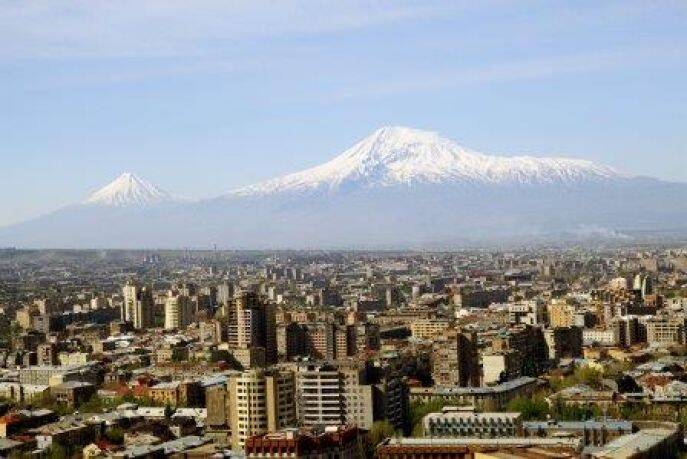
Today, you’ll get to know Yerevan, the vibrant capital of Armenia, on a walking tour with a local English-speaking guide. Discover how the city is evolving from its Soviet past while forging a modern identity, blending history, culture, and contemporary life.
Start at Republic Square (formerly Lenin Square), the bustling heart of the city. Here you’ll find the National History Museum and the National Art Museum, showcasing Armenia’s rich cultural heritage. Stroll along Hanrapetutyan Street, where stately Soviet-era buildings stand alongside striking modern architecture, reflecting Yerevan’s evolving urban landscape.
Continue to Freedom Square, home to the National Opera, and explore the numerous restaurants and cafes, a lively hub especially in the evening.
A highlight of your visit is the Matenadaran, Armenia’s world-famous library, housing thousands of ancient manuscripts and miniature paintings. From here, it’s a short walk to the Cascade, a monumental staircase with fountains and waterfalls. Climb to the top for panoramic views of the city, and explore the modern art galleries located at its base.
Nearby stands the iconic Mother Armenia statue, towering above Yerevan and offering another vantage point over the city. A visit to the Genocide Memorial and Museum is also essential, providing a poignant insight into the tragic events of the early 20th century through photographs, documents, and personal stories.
If your visit falls on a Sunday, consider a trip to Echmiadzin, the spiritual center of the Armenian Apostolic Church, to experience the country’s religious heritage firsthand.
This day in Yerevan combines history, art, and culture, giving you a comprehensive introduction to Armenia’s capital and its dynamic identity.
Day 14 depart Yerevan